
The May Flowers Table Runner is a refreshing seasonal project that brings the vibrancy of a spring garden directly to your dining room table. Designed by Brenda Shreve, this pattern utilizes geometric shapes to mimic blooming petals, making it a standout piece for anyone looking to practice precision piecing with a floral flair.
This pattern is offered as a free resource by APQS, providing quilters with a professional-grade design that balances complexity with visual appeal. Whether you are prepping for a garden party or simply want to refresh your home decor, this runner serves as an excellent canvas for experimenting with bright, saturated fabric palettes.
May Flowers Table Runner
The construction of this runner relies heavily on the use of 60-degree triangles, which create the signature “flower” look without the need for difficult curved piecing. This approach makes it a fantastic project for intermediate quilters who want to move beyond basic squares and rectangles.
By focusing on nesting seams and careful pin placement, you can ensure that the center points of each flower remain sharp and well-defined. If you are new to working with angles, this project offers a manageable scale to hone those skills before committing to a full-sized quilt.
The design is versatile enough to work with various fabric styles, from modern solids to traditional batiks. Many quilters find that using fat quarters from a single coordinated collection helps maintain a cohesive look throughout the runner while providing enough variety to make each “flower” unique.
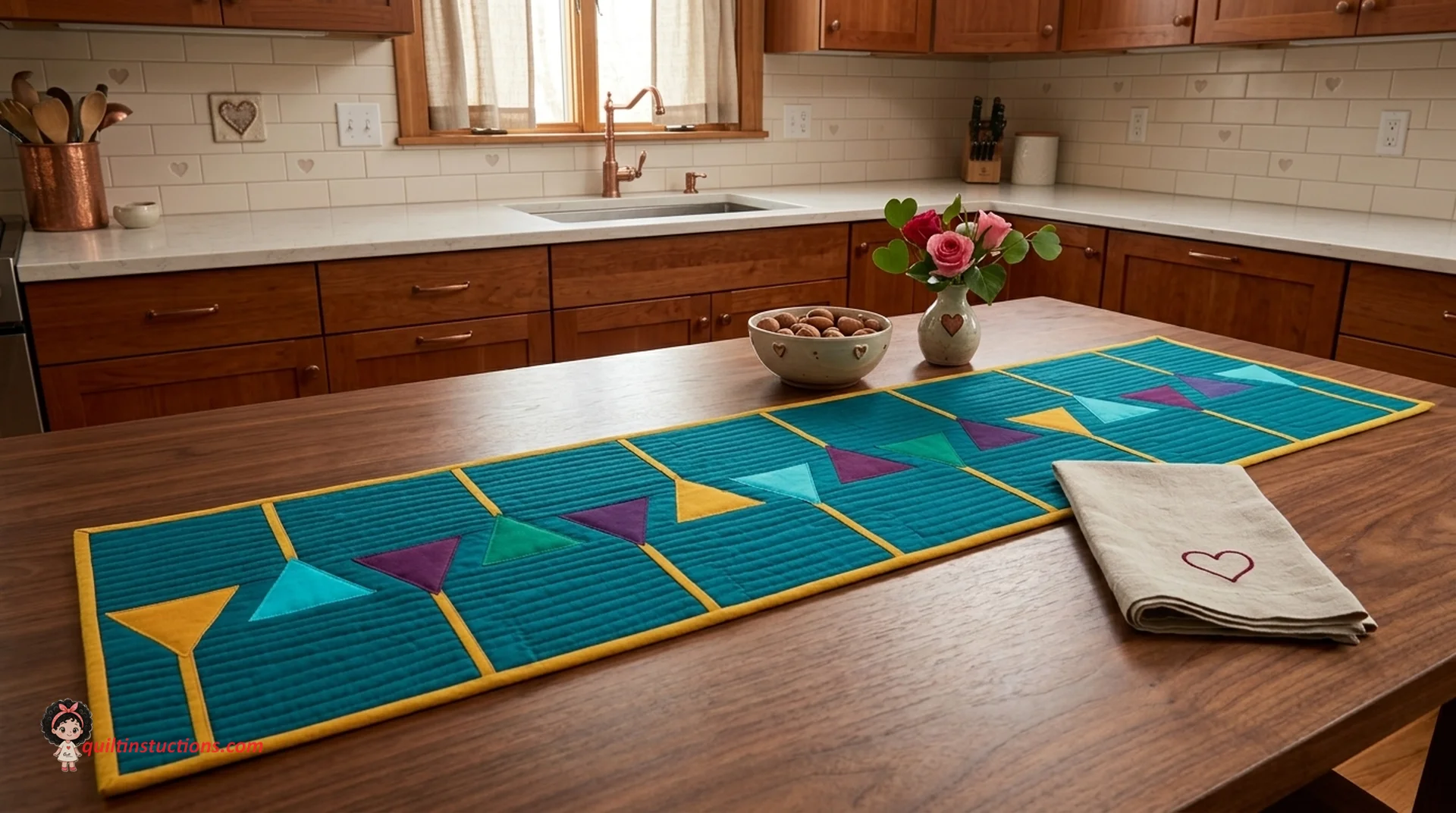
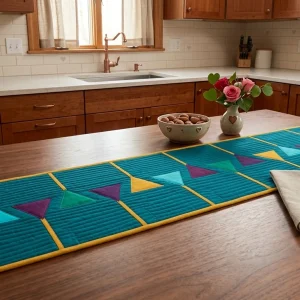
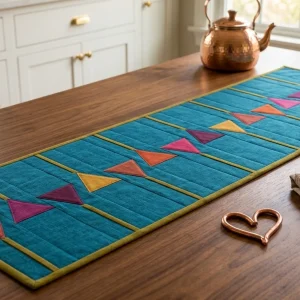
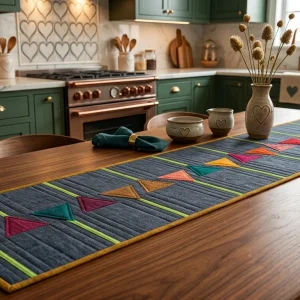
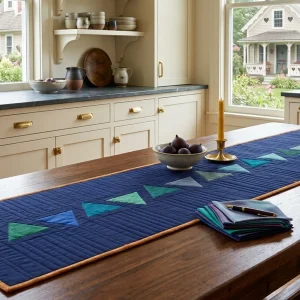
The use of contrasting cool blues against warm yellows in this version creates a dynamic energy that feels both modern and timeless. This runner would look exceptionally sophisticated draped over a dark wood farmhouse table, where the bold colors can truly pop against the natural grain of the wood.
Essential Materials and Fabric Selection
To achieve the best results, selecting the right fabrics is paramount. You will need a variety of prints for the flower petals and a consistent background fabric to make the floral motifs stand out. High-quality quilting cotton is recommended to ensure the triangles do not stretch during the sewing process.
A scant 1/4 inch seam is the secret to success with this pattern. Because there are many intersections where multiple points meet, even a tiny deviation in seam allowance can cause the blocks to become distorted or the finished runner to wave.
For those looking to expand their skills, incorporating some beginner quilting tips regarding fabric starching can be a game-changer. Starching your fabric before cutting the 60-degree angles will provide extra stability and prevent the bias edges from stretching as you handle them.
Where to Buy Fabrics
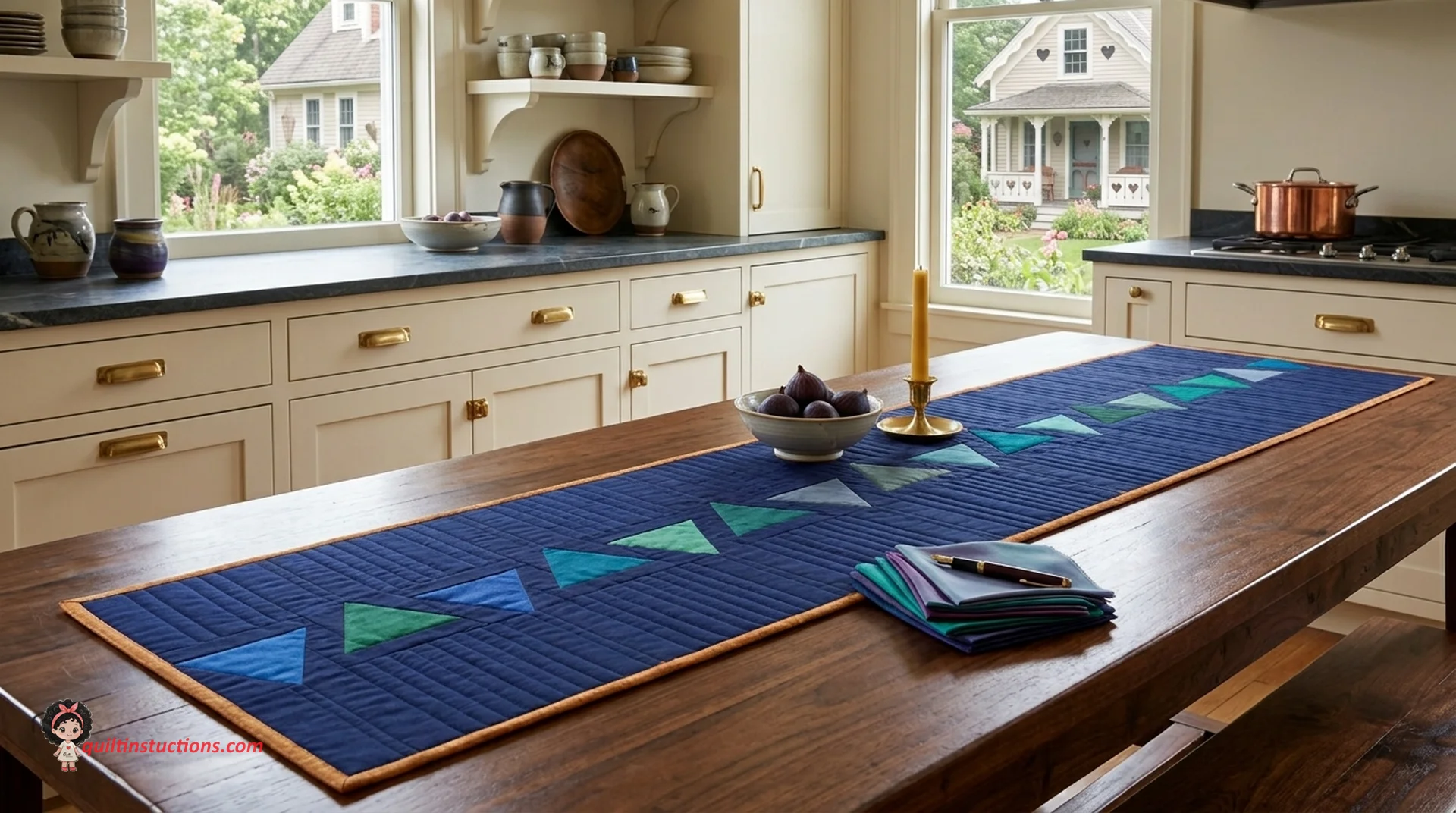
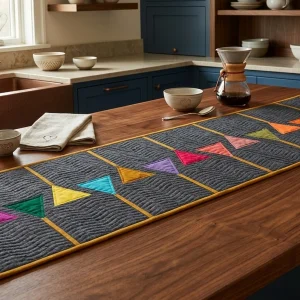
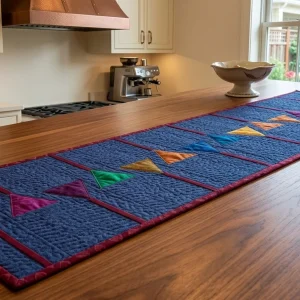
Zooming in on the construction, you can see how the sharp points of the triangles define the floral motif. This is a perfect example of why maintaining precision is vital; notice how the quilting lines complement the geometric shapes, adding texture without distracting from the pieced design.
Tips for Longarm and Domestic Quilting
Once your top is finished, the quilting stage offers another opportunity for creativity. Since this pattern was developed in association with APQS, it is perfectly suited for custom longarm work. You might consider “stitching in the ditch” to anchor the flowers and then adding a swirling leaf motif in the background areas.
If you are working on a domestic machine, simple straight-line quilting can also look stunning. Following the lines of the triangles creates a modern, echoed effect that reinforces the floral structure. For more advanced ideas, exploring longarm quilting basics can provide inspiration for more intricate fill patterns.
Remember that a table runner is a functional item. Choosing a durable thread and a slightly denser quilting design will help the piece withstand frequent use and occasional laundering. It is an ideal project to showcase among other free quilt patterns in your home collection.
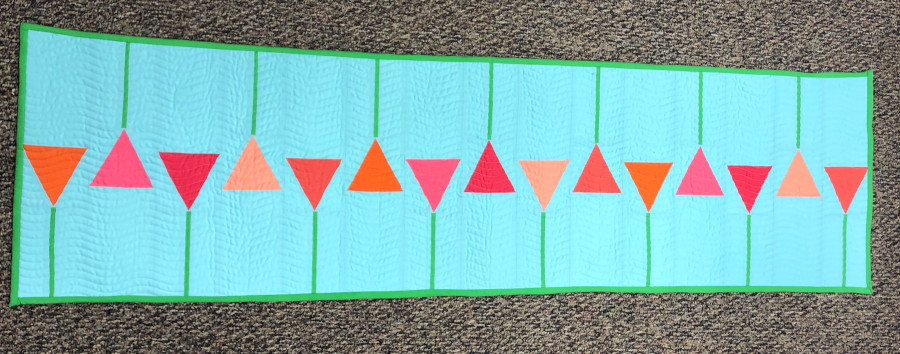
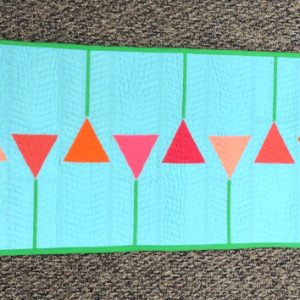
The original designer’s version showcases a softer, more traditional palette. It demonstrates the versatility of the pattern; by choosing muted tones, it transitions from a bold statement piece to a subtle, cozy accent that is perfectly suited for a quiet breakfast nook or a sunroom.
Frequently Asked Questions
What is the skill level for this pattern?
This pattern is classified as Intermediate. While the piecing is straightforward, the 60-degree angles require careful alignment and consistent seam allowances to ensure the blocks lay flat.
Do I need a special ruler for the triangles?
While you can use the templates provided in the PDF, a dedicated 60-degree quilting ruler makes the cutting process much faster and more accurate.
How long does it take to complete?
For an experienced quilter, the top can be pieced in a single afternoon. It is a great “quick finish” project for a gift or a holiday refresh.
Expert Tips
- Always press your seams open or to the side carefully to reduce bulk at the floral centers.
- Use a fine 50wt cotton thread to keep your seams thin and precise.
- Test your 1/4 inch seam on scrap fabric before starting the main project.
About the DesignerBrenda Shreve is the talented designer behind Red Barn Quilting and a prominent educator for APQS Oklahoma. With years of experience in both piecing and longarm quilting, Brenda is known for creating designs that are as fun to quilt as they are to piece. Her work often emphasizes geometric harmony and accessible techniques for quilters of all levels.
Facebook Community
This project is a wonderful way to celebrate the changing seasons through the art of quilting. By following Brenda Shreve’s expert guidance and focusing on the fundamentals of triangle piecing, you will create a beautiful centerpiece that captures the essence of a blooming garden. Happy sewing!